Building a yard wall into a Chatham slope
A garden on a Chatham hill is often a level strip cut into the slope, and the wall that holds the top of it up is usually the first thing to build. This guide works through a 3.5 metre yard wall, one brick thick and a metre high, set into the bank. It counts the bricks, the capping, the mortar and the footing from those measurements, and it allows for where the lorry can stop, which shapes the whole drop.
Chatham BM is the Chatham and Luton delivery site of Discount Builders Merchants (KENT) LTD, the builders' merchant at Lower Road, Northfleet, DA11 9BB. There is one yard, and orders are placed on www.discountbm.co.uk.

Where the lorry can stand on a slope
The stopping place matters as much as the count of bricks. On a hill the lorry pulls in wherever the parked cars leave a gap, and the stack has to sit on ground that will hold it still. Sand and cement bags slide on a slope, so they belong on level ground at the top of a drive, clear of the kerb.
Put the whole wall on one order. A second drop to the same steep road means a second lorry looking for a space, and in Chatham that can cost a morning. Say on the order which side of the road the cars sit, whether the kerb is dropped, and which gate the bags have to pass through.
Counting brick for a one-brick wall
Bricks are counted by the square metre of face: 120 for a one-brick wall, or 60 for a half-brick. Measure the length and the height, multiply them for the face, then apply the rate. Add a tenth for cuts and breakage, and more wherever a pier or an opening interrupts the course.
The face here is 3.5 metres long and one metre high, which is 3.5 square metres. At 120 a square metre that is 420 bricks, and a tenth on top takes it to 462. Count the whole wall before the order goes in, and buy every brick in one batch so the colour stays even across the face.
Stone and drainage behind a bank
Behind a wall that holds a bank, water has to be given a route out. Run a strip of 20 mm washed stone against the back of the footing, and set weep holes near the base to let the rest through. Geotextile on the soil side keeps earth from clogging the stone.
How deep the strip goes, how far apart the weep holes sit and how high the bank may rise are set by the design rather than guessed on site. A wall that holds back a bank is a retaining wall: have an engineer confirm its thickness, footing and drainage before ordering a single brick.
Parking and the drop on a steep street
Plenty of hill streets sit under parking controls, so a load may need a bay suspended for the day. The person running the job applies to Medway Council for the suspension, and it has to be in place before the lorry is sent. The order carries the date, the hours and the bay's length. Without a bay, the bags are left at the gate and taken in by hand, which is slower and needs more people.
A bulk bag is the safer unit on a steep street, since it stays where it is set and can be opened at the point of use. A loose tip is a poor fit for a slope: the tipper needs level ground and clear space overhead before it can empty.
Storing cement and brick on a slope
On a hill job cement is the first material to suffer. Damp ground draws moisture into the bags, and a pallet on a sloping drive may slip when it rains. Set the bags on boards with a sheet over them, and bring the oldest bag out first.
Brick is happy outside as long as it sits flat on boards with the good faces up and clear of the drive's edge. Blocks weigh a lot, so keep them on their pallet until the wall needs them.
Rules of thumb
| Bricks for each square metre | One-brick wall: 120 a square metre. Half-brick: 60. Add a tenth for cuts and breakage. |
|---|---|
| Bricks laid on edge | One brick for every 75 mm of run, with a tenth added on top. |
| Stone behind the wall | Stone for a 300 mm wide trench, 1 m deep, is 0.3 cubic metres per metre of run. Shingle weighs roughly half a tonne a metre. |
| Footing concrete | Mixed one part cement to five of ballast, each cubic metre takes 13 bags of 25 kg cement and about 1.9 tonnes of ballast. |
| Mortar sand | About a tonne of sand for every thousand bricks, with seven bags of 25 kg cement for the same thousand. |
The shop has calculators that turn a measurement into a quantity.
Worked order: A 3.5 metre yard wall on a Chatham slope
| Product | Quantity | What it is for | Cost |
|---|---|---|---|
| Mayfield Yellow Stocks Bricks | 462 at £1.08 | Face of 3.5 m by 1 m: 3.5 square metres, which at 120 bricks a square metre is 420. Adding a tenth for cuts gives 42 more, so 462 in all. | £498.96 |
| Staff Blue Solid | 52 at £1.75 | Bricks on edge along the 3.5 m run: one every 75 mm is 46.7, rounded up to 47, and a tenth more brings it to 52. | £91.00 |
| Bulk Bag Soft Building Sand Nepicar | 1 at £45.83 | Mortar sand. 462 bricks take roughly 0.46 tonnes of building sand, which a single bulk bag holds at about 0.8 tonnes. Confirm the weight with the yard. | £45.83 |
| Bulk Bag Ballast 20mm | 1 at £40.00 | A footing 0.4 m wide, 0.2 m deep and 3.5 m long holds 0.28 cubic metres. Ballast weighs about 1.9 tonnes a cubic metre, so 0.53 tonnes in all, which one bag of roughly 0.8 tonnes holds. | £40.00 |
| 25kg Mastercrete Cement (plastic) | 8 at £7.99 | Mortar: 462 bricks at seven bags a thousand is 3.2, so four bags. Footing: 0.28 cubic metres at 13 bags is 3.6, so four more. Eight in all. | £63.92 |
| Goods | £739.71 | ||
| Delivery to ME4 | £0.00 | ||
| Delivered total ex VAT | £739.71 | ||
| Delivered total inc VAT | £887.65 | ||
Bulk bags: the bags in this order are counted at about 0.8 tonnes each. That is a planning figure. The shop does not publish a weight for a bulk bag, so confirm the number of bags with the yard before ordering.
Not in this order: The coping stone on top, any reinforcement the design calls for, the drainage stone and geotextile for the bank, and the ties, sealant and mortar additives, none of which these lines count.
The quantities are a starting point for a job of this size. Put the same goods in a basket on www.discountbm.co.uk with your own postcode to see the figure for your order, or send the yard your list.
On the shop today
The products this guide talks about, from the shop's Bricks aisle. Prices last checked .
-
 Mayfield Yellow Stocks Bricks
each
£1.30 inc VAT
£1.08 ex VAT
In the yard
-
 Staff Blue Perf
each
£1.50 inc VAT
£1.25 ex VAT
In the yard
-
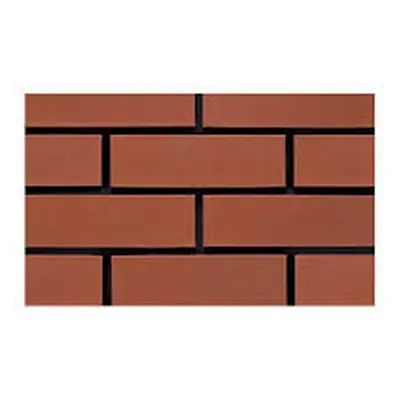 Red Class B Engineering Perf
each
£0.60 inc VAT
£0.50 ex VAT
In the yard
-
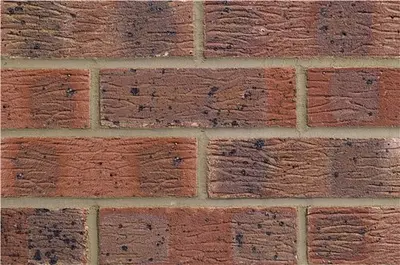 Multi Clayden Red
each
£1.62 inc VAT
£1.35 ex VAT
In the yard
-
 Staff Blue Solid
each
£2.10 inc VAT
£1.75 ex VAT
In the yard
-
 Parkhouse Western Red Multi Offshades
each
£0.50 inc VAT
£0.42 ex VAT
In the yard
-
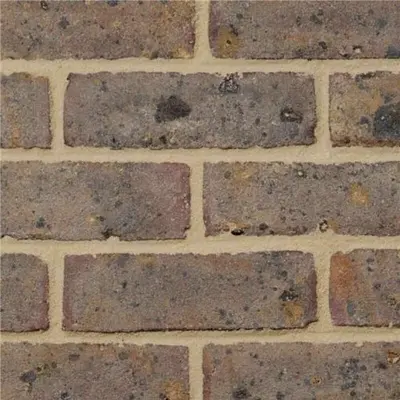 FLB Selected Dark Multi Bricks
each
£1.44 inc VAT
£1.20 ex VAT
In the yard
-
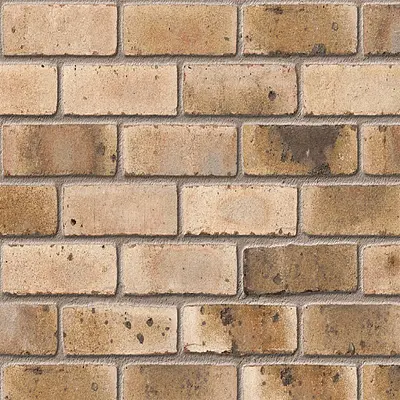 Cookbridge Yellow Multi Stock Bricks
each
£0.78 inc VAT
£0.65 ex VAT
In the yard
Prices are the shop's prices today. Stock and ordering are on www.discountbm.co.uk.
Bricks for Chatham and Luton, from Northfleet See all Bricks on the shop
Delivery to Chatham and Luton
- ME4
-
Free when the goods reach £41.66 ex VAT (£49.99 inc VAT).
A smaller order pays the difference up to that amount: goods of £25.00 ex VAT (£30.00 inc VAT) pay £16.66 ex VAT (£19.99 inc VAT) for delivery.
More guides for Chatham and Luton
- Boarding a Luton loft floor from joists up Joists, chipboard and CLS studs for a Luton loft floor on a 3.9 metre span, with the count for each part, the depth to check and a worked order.
- Re-guttering a Dockyard terrace and its lead Replacing the gutter, downpipe, lead and capping on an older house by Chatham Dockyard, with the fall to set, fittings to add and consent to check first.
- Stone and cement for a Chatham garden shed Stone, ballast and cement for a shed base and a short path in Chatham, all counted on one order so the stone and concrete arrive together.